salakhalimunmountain.com – The first thing you notice when the low clouds break over Salak is not its shape but its voice — a slow, steady chorus of cicadas, the soft hiss of small streams, and the distant rumble of wind through tall dipterocarps. Gunung Salak rises to 2,211 meters above sea level, wrapped in an ever-shifting cloak of green. For people of Sukabumi and Bogor the mountain is a guardian at the western edge of their world, much as Gunung Gede Pangrango watches from the north. But beyond its guardian role, Salak holds stories older than memory — stories of craftsmen, rivers of trade, and a silver kingdom once whispered of by ancient geographers.
Walking into the Mountain’s Memory
Step off the footpath and feel the rainforest hug you. The air turns heavy and warm; every inhalation tastes faintly of wet earth and orchids. Moss flattens underfoot. Under that canopy the world is smaller and deeper — a place where a single leaf’s shadow can become a map of meaning. In those quiet pockets human history and natural time flow together. The name Salaka — often translated as “silver” — is a thread that pulls us through both.
Salaka Nagara: The Silver Heart of Early Sunda
Irman Firmansyah, a Sukabumi historian, traces the word salaka to Sanskrit roots. The old dictionaries of the colonial era translate salaka plainly: perak — silver. Across seas and centuries, classical writers such as Claudius Ptolemaeus spoke of an ancient land called Argyre, the land of silver. Some scholars believe that what Ptolemy called Argyre may correspond to early trading polities in western Java: a region where silver and skilled metalwork shaped the playing field long before spices became the island’s most famous export.
The Evidence of Names
Language keeps old economies alive. Place-names like Pandeglang may whisper of metalworkers: panday (artisan or smith) and geulang (bracelet or crafted ornament). If these etymologies are right, the coasts and hinterlands below Salak were once dotted with workshops and kilns where silver was melted, hammered, and shaped into things of power — tools, jewelry, and perhaps objects used in ritual life.
When Silver Met the Sea
Before pepper and cloves made Java world-famous, other valuable goods moved on the sails of regional merchants. Gold, ivory, and silver find mentions in early trading records and in the memory-stories of coastal settlements. These goods connected inland craftsmanship with international markets. Salaka Nagara — if it existed as described in some manuscripts — stood at that crossroads: a kingdom whose wealth lay partly in the hands of skilled makers and the ores they transformed.
Manuscripts, Inscriptions, and the Pull of Time
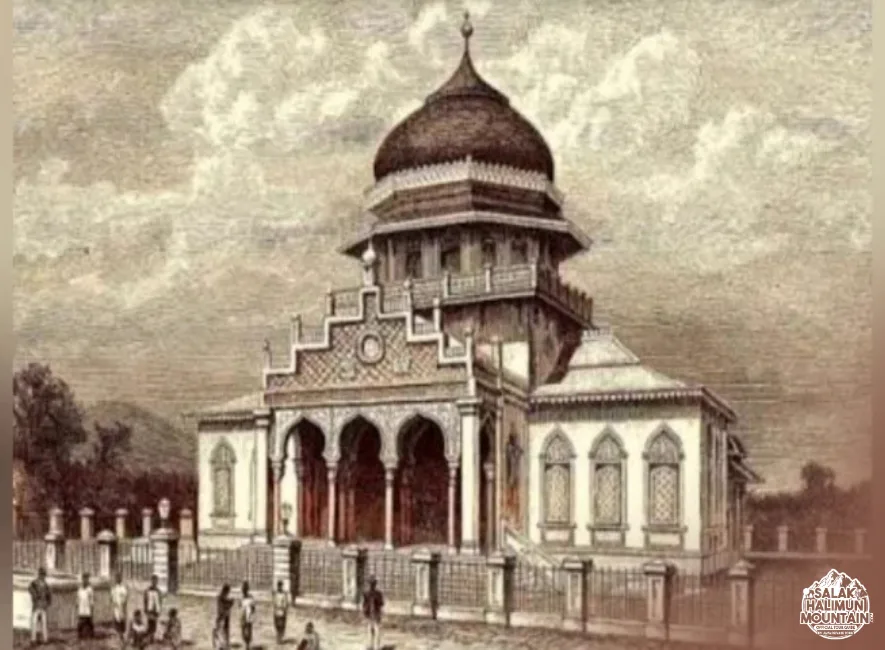
The Wangsakerta manuscripts, compiled in the late 17th century, contain genealogies and local histories that mention Salaka Nagara. Critics debate their authenticity, and scholars split between seeing them as later constructions or preservers of older traditions. Yet the manuscripts align in curious ways with inscriptions like Sanghyang Tapak (dated 1030 CE) and with timelines that point back to the first and second centuries CE. These convergences suggest that the idea of a metal-rich, well-organized polity in western Java is not mere fancy.
Names and Meanings: Salak, Salaka, or Saloka?
Not all who study the mountain agree that Salak simply means silver. Another interpretation reads the name as Saloka — a compound of Sa (one, the sacred) and Loka (world or place). In that light, Gunung Salak becomes a cosmic center: the place of Sanghyang Tunggal, the one supreme force recognized in local spiritual vocabulary. Both readings — silver and sacred place — are not mutually exclusive. They deepen how we see Salak as both an economic anchor and a spiritual core for early Sunda communities.
The Mountain’s Guardians and Colonial Encounters
Stories from the colonial period make clear that Salak’s power was respected and often feared. In the early 19th century Andries de Wilde recorded being required to negotiate with local juru kunci (custodians of sacred places) before attempting to climb the peak. The mountain enforced its own rules: Europeans were warned away, and even guerrilla fighters during World War II reported the forest’s capacity to wear down well-equipped troops. The ancient warnings likely mixed real danger — steep, confusing terrain, sudden weather changes — with spiritual protocols that insisted on humility and ritual respect before entering certain zones.
Trails, Trees, and the Livelihoods of Today
Modern hikers approach Gunung Salak through one of three main official routes: Cidahu Gate, Pasir Reungit, and Cimalati. Each path moves through different slices of the Halimun–Salak National Park, offering a range of ecosystems — from lower-elevation mixed forest to cool montane moss forests nearer the ridge. Along those trails you’ll find local guides who still tell the old stories, point out sites of ritual significance, and teach responsible trekking ethics. The forest remains a source of livelihood: sustainable guiding, smallholder coffee plots on the lower slopes, and community-based stewardship that bridges cultural practice and conservation.
Silver in the Stones: Visual Clues and Landscape Memory
Look toward Salak at sunrise and you may see the legend in the light: wet rock faces and silvery moss catching the early rays so the slopes appear to shimmer. From a distance that glint could evoke a valley of mines or hidden veins of ore, and it’s easy to see how ancient visitors might name the mountain for its metallic shine. Oral stories, place-names, and the physical gleam of the landscape converge to make Salak a living mnemonic for a past shaped by metal and meaning.
Respecting Sacred Spaces and Responsible Trekking
Walking through Halimun–Salak asks for more than physical readiness; it asks for respect. Many sites are sacred: small shrines, offerings on stone altars, places where local communities still practice ritual observances. Trekking with local guides not only ensures safety but also supports cultural norms — asking permission where appropriate, avoiding restricted areas, and leaving no trace. The forest rewards walkers who pay attention: the soft hush of leaves, the sudden flight of a sunbird, the mud-slick path that tells you the rain came in the night.
Conservation and the Mountain’s Future
Halimun–Salak National Park is home to a wondrous array of species: amphibians that only live in these mossy hollows, ancient dipterocarps that hold nests and shade, and larger mammals whose silence marks the depth of the forest. Efforts by park authorities and local communities focus on protecting corridors, reducing illegal logging, and promoting sustainable ecotourism. Responsible visits that respect both cultural practices and biodiversity can help ensure Salak’s stories continue for generations.
Final Thoughts: Listening to the Mountain
Mount Salak is a place where language, landscape, and the skills of ancient people combine into a single, living narrative. Whether you come searching for the traces of Salaka Nagara, drawn by the idea of a silver kingdom, or arrive seeking the hush of a deep rainforest walk, you find yourself part of a long line of listeners. The mountain keeps its secrets lightly: not hidden so much as reserved for those who approach with humility.
So, if you’re ready to explore the wonders of Mount Salak Halimun, head over to our ONLINE BOOKING PAGE and let’s start planning your adventure.
Or simply CLICK THIS LINK to chat with us on WhatsApp.
With our team, you’re not just getting a guide; you’re gaining a local friend who will ensure your trip is nothing short of extraordinary.